Veterinary Report: How Often to Deep Clean Bird Cages (Sanitation Protocol)
This essential veterinary report outlines proven sanitation protocols for deep cleaning bird cages, ensuring avian health by targeting pathogen hotspots like food dishes and perches. Learn daily disinfection routines with FDA-approved cleaners, weekly scrubbing techniques, humidity control to combat mold, and emergency decontamination steps. Tailored schedules based on bird species and climate prevent disease outbreaks, making this guide a must-read for responsible bird owners seeking a safe, hygienic habitat.
Veterinary Report: How Often to Deep Clean Bird Cages (Sanitation Protocol)
This comprehensive veterinary report delivers a detailed overview of optimal deep cleaning frequencies for bird cages, emphasizing the critical role of sanitation protocols in safeguarding avian health. By addressing microbial risks, practical cleaning techniques, and evidence-based schedules, it serves as an indispensable resource for bird owners committed to preventing disease and ensuring their pets' longevity.
I. Pathogen Alert: High-Risk Zones in Avian Enclosures (Microbiology Lab Findings)
Recent veterinary microbiology studies reveal alarming pathogen hotspots within bird cages, with laboratory analyses consistently identifying food and water dishes, cage grates, perches, and enrichment toys as primary reservoirs for harmful bacteria like E. coli and Salmonella, alongside fungal spores such as Aspergillus. These high-moisture areas, exposed to organic matter and droppings, create ideal breeding grounds for microbes. Understanding these specific zones is the foundational step in implementing a targeted sanitation protocol to protect avian health and prevent infections.
II. Daily Regimen: Food/Water Station Disinfection (FDA-Approved Cleaners List)
Daily disinfection of food and water stations is non-negotiable for halting rapid bacterial proliferation in bird cages. Remove all dishes, scrub thoroughly with hot water and a dedicated brush to eliminate organic debris, then disinfect using avian-safe products. Rinse copiously to remove toxic residues, and always select cleaners approved by regulatory bodies. Recommended FDA-approved options include:
- Accelerated Hydrogen Peroxide (AHP®) Solutions: Fast-acting, broad-spectrum, and low toxicity; breaks down into water and oxygen for safety.
- Quaternary Ammonium Compounds (Quats): Effective against bacteria and some viruses; ensure precise dilution and adequate contact time.
- Chlorhexidine Solutions: Ideal for general disinfection with minimal irritation compared to alternatives.
Meticulously follow manufacturer instructions for dilution and contact time to maintain optimal hygiene and protect your birds.
III. Weekly Scrub: Grating/Perch Deep-Cleaning Techniques (Time-Motion Efficiency Studies)
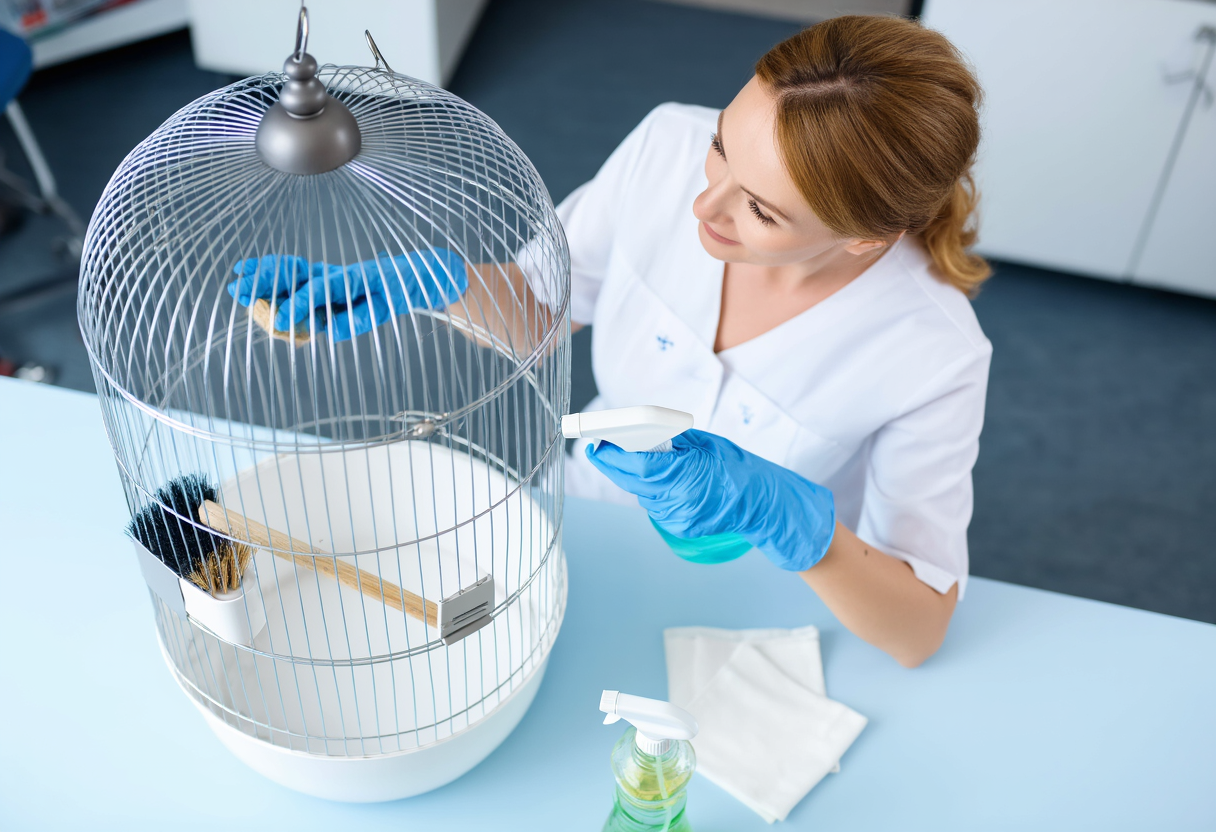
Beyond daily tasks, a thorough weekly deep clean targets structural elements of bird cages, where grates and perches accumulate dried droppings, food debris, and bacteria. Remove all removable parts and soak them in hot, soapy water or a disinfectant bath to loosen debris efficiently, as shown by avian husbandry time-motion studies. Use specialized angled brushes for scrubbing grooves and crevices, then rinse extensively under running water until no suds remain. Allow parts to air dry completely before reassembly to maximize pathogen removal with minimal effort and ensure cage safety.
IV. Mold & Fungus Combat: Humidity Control Products (EPA Efficacy Ratings)
Humidity silently fosters dangerous mold and fungus growth in bird cages, particularly Aspergillus, a severe respiratory threat. Combat this through environmental control and targeted cleaning: apply EPA-registered mold inhibitors or fungicides labeled safe for birds during deep cleans, focusing on corners and poorly ventilated areas. Crucially, invest in reliable dehumidifiers or climate systems to maintain ambient humidity at 40-60%. Always check EPA efficacy ratings for mold/mildew control when selecting products to guarantee they meet high performance standards and protect avian respiratory health.
V. Emergency Decontamination: Handling Illness Outbreaks (AVMA Quarantine Procedures)
During illness outbreaks, standard protocols fall short, requiring immediate and rigorous emergency decontamination for bird cages. Isolate sick birds in a separate quarantine cage per AVMA guidelines, then strip down the infected cage completely. Disinfect or discard all items using a potent, vet-recommended solution effective against the specific pathogen. Scrub every surface meticulously, rinse exhaustively, and air dry in sunlight if possible. Repeat cleaning as needed to eliminate risks and restore a safe environment, emphasizing swift action to prevent spread.
VI. Toxic Residue Danger: Rinse Protocol Essentials (Clinical Case Studies)
Thorough rinsing is the most overlooked yet critical step in cleaning bird cages, as clinical case studies link disinfectant residues to serious avian health issues like neurological damage, skin burns, and respiratory distress. Birds are highly sensitive to chemical traces, so after any disinfectant use, rinse all surfaces, grates, perches, dishes, and toys copiously with clean, running water. Continue rinsing until water runs clear and surfaces feel residue-free to the touch, then air dry to dissipate remnants. This protocol prevents toxicity and ensures bird safety.
VII. Enrichment Item Hygiene: Disinfecting Toys/Swings (Material Compatibility Guide)
Enrichment items such as toys, swings, and foraging devices are vital for mental well-being but pose high pathogen risks in bird cages due to constant contact. Disinfect frequently based on material compatibility:
- Plastic/Acrylic: Tolerate most disinfectants; soak, scrub, and rinse thoroughly for safety.
- Wood/Natural Fibers (Rope, Seagrass): Highly porous; soak in bird-safe disinfectant, rinse extremely well, and ensure complete drying. Replace frequently as they degrade to avoid hazards.
- Metal (Stainless Steel preferred): Withstand strong disinfectants and heat; boiling is highly effective for sterilization.
Always inspect items for damage after cleaning and replace if unsafe to maintain a risk-free habitat.
VIII. Air Purification Tech: Reducing Airborne Particulates (HEPA Filter Research)
Sanitation extends beyond surfaces, as airborne dust, dander, feathers, and pathogens pose respiratory threats around bird cages. Research confirms High-Efficiency Particulate Air (HEPA) filtration captures 99.97% of particles down to 0.3 microns, reducing allergens, mold spores, and bacteria. Place a HEPA air purifier near the cage, size it appropriately for the room, and change filters regularly per instructions. This significantly enhances air quality for both birds and humans, supporting overall health in confined spaces.
IX. Sanitation Calendar: Custom Schedules by Species & Climate (Veterinary Hospital Templates)
A one-size-fits-all approach fails for bird cages; optimal deep cleaning frequency depends on species, bird count, cage size, and climate humidity. Veterinary hospitals use customized sanitation calendars, and as a general guideline:
- High-Mess/Large Birds (Macaws, Cockatoos): Deep clean grates/perches 2-3 times weekly; full cage breakdown weekly.
- Medium Birds (Cockatiels, Conures): Deep clean grates/perches weekly; full breakdown bi-weekly.
- Small Birds (Finches, Budgies): Deep clean grates/perches weekly; full breakdown monthly, with close monitoring.
- High Humidity Climates: Increase deep cleaning frequency for all components due to elevated mold risk.
Consult an avian veterinarian to develop a tailored schedule specific to your bird's needs, ensuring a consistently hygienic and safe environment.