Is It Possible to Maximize Space with Budget Furniture in Small Apartments?
Discover how to transform cramped urban apartments into spacious, functional sanctuaries using affordable furniture. This guide covers overcoming space challenges, defining space-saving solutions, leveraging budget advantages, top furniture picks, smart layout strategies, DIY customizations, savvy shopping tips, and inspiring real-life transformations—all without breaking the bank. Achieve maximum efficiency and style affordably!
Is It Possible to Maximize Space with Budget Furniture in Small Apartments?
Living in a compact apartment often feels like a relentless battle against clutter, especially when budgets are tight. Many urban residents in the US grapple with a common question: is it truly feasible to maximize every precious inch of space using affordable furniture? This article delves deep into that query, revealing how budget-friendly solutions can effortlessly turn cramped quarters into stylish, functional havens. Affordable furniture, when chosen wisely, offers a practical path to decluttering and enhancing daily life—making small spaces feel expansive and inviting without financial strain.
Challenges of Small Apartment Living
Small apartments across America frequently face fundamental space constraints rooted in modern architectural limitations, turning everyday routines into complex puzzles. A severe lack of floor space restricts movement and furniture arrangements, complicating activities like hosting friends or finding room for essential items. For example, maneuvering around bulky sofas or tables can create bottlenecks, hindering the flow of daily life.
Storage limitations amplify this frustration, as closets and cabinets often prove inadequate for accumulating belongings such as clothing, seasonal gear, or household supplies. This forces residents to get creative with organization, but financial constraints add another layer—many renters and homeowners struggle to afford high-end custom storage, which could otherwise alleviate these issues. Compounding this, design dilemmas arise where the desire for a cohesive, stylish aesthetic clashes with practical needs, leading many to sacrifice efficiency for looks.
Interestingly, this tension between style and functionality often results in cluttered layouts that waste valuable square footage, highlighting the importance of smart, accessible solutions for tight budgets.
What Defines Space Saving Furniture
What exactly sets space-saving furniture apart? At its core, this innovative category includes multi-functional and compact designs tailored to serve multiple purposes in minimal areas, maximizing utility without excess bulk. For instance, foldable tables transition seamlessly from dining surfaces to workspaces in seconds, proving ideal for studio apartments where every piece must justify its presence.
- Wall-mounted units like floating shelves or fold-down desks free up floor space by leveraging vertical real estate, turning unused walls into storage hubs.
- Modular systems offer customizable configurations such as stackable cubes that adapt to changing needs, all while keeping costs low through mass production and accessible materials.
These designs not only address spatial limitations but also promote flexibility, allowing users to reconfigure their environments as life evolves—essential for dynamic city living.
Advantages of Affordable Solutions
Affordable furniture delivers significant benefits for small-space dwellers, starting with substantial cost savings compared to custom-built options, which often carry exorbitant price tags. This affordability frees up funds for essentials like rent or utilities while enabling easy reconfigurations to suit evolving lifestyles—say, transitioning from a home office to an entertaining space.
Easy updates are another key perk; budget-friendly pieces can be swapped or refreshed without major financial strain, reducing the commitment often tied to permanent fixtures. Crucially, this accessibility empowers renters who face restrictions on modifications, allowing them to achieve personalized, efficient spaces with temporary, wallet-friendly options that don't compromise on style or function.
Top Budget Friendly Furniture Pieces
- Sofa beds: Dual-use marvels that function as seating by day and sleeping quarters by night, eliminating the need for a separate guest room.
- Nesting tables: Flexible solutions with stackable designs that expand surface area when needed and tuck away neatly otherwise, perfect for impromptu gatherings.
- Storage ottomans: Organizational heroes that double as footrests or extra seats while discreetly hiding clutter like blankets or books.
- Vertical shelving units: Space-savers that capitalize on height to free up floor space, ideal for displaying decor or storing essentials in narrow corners.
These top picks demonstrate how clever choices turn constraints into opportunities, proving you don't need to overspend to create a harmonious, efficient home.
Layout Strategies for Maximum Space
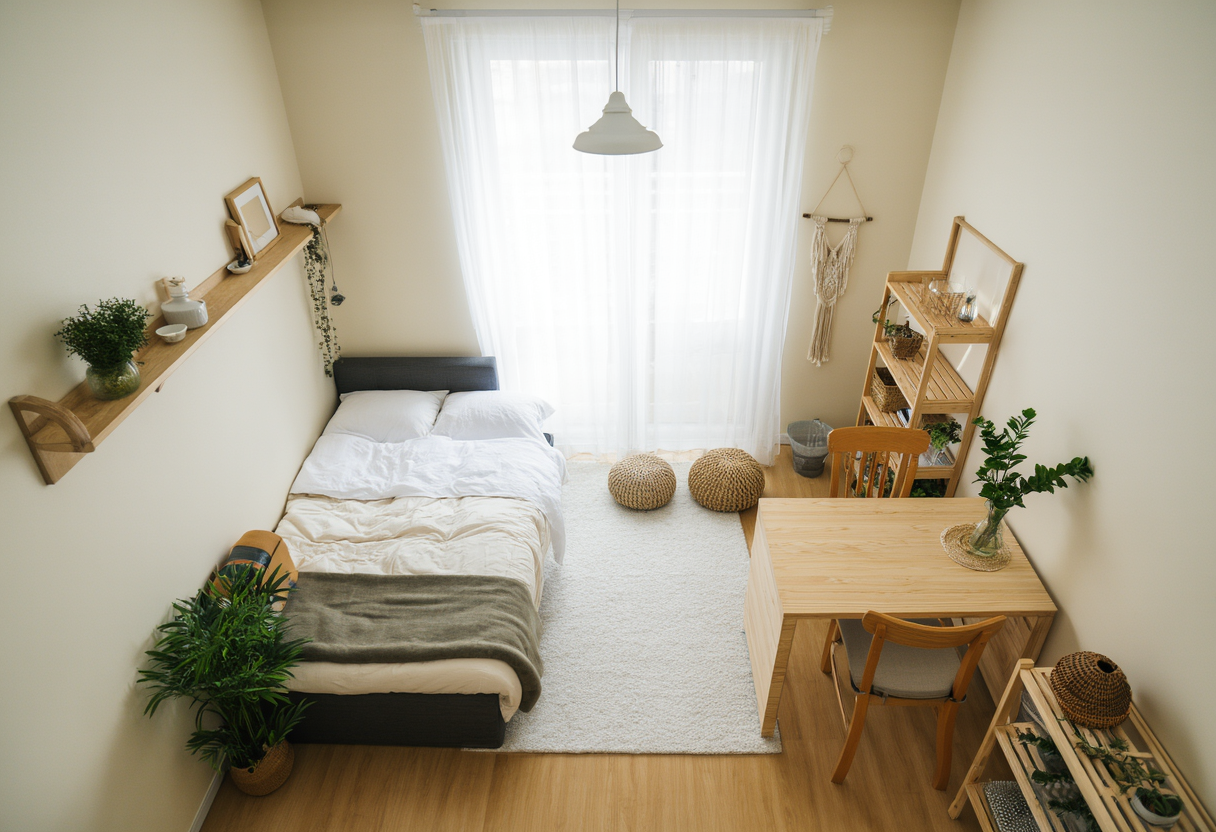
Effective layout strategies are essential for squeezing value from every square foot, beginning with open floor plan principles that replace rigid room divisions with multifunctional zones—this enhances the illusion of spaciousness even in confined areas. For example, defining a 'living' section with area rugs while keeping pathways clear optimizes usability without visual clutter.
Traffic flow optimization prevents bottlenecks by ensuring easy movement; place furniture along walls rather than in walkways to maintain an open feel. Additionally, light and color play pivotal roles: light hues on walls reflect natural light, making rooms appear larger, while strategic mirrors amplify this effect, creating airy, inviting environments. Together, these techniques foster a sense of harmony and efficiency that belies the actual size of your space.
DIY and Customization on a Budget
For those eager to personalize their homes, DIY approaches offer cost-effective ways to tailor furniture to unique needs. Repurposing thrifted finds, such as converting an old dresser into a chic kitchen island, not only saves money but also injects character into small spaces on a shoestring.
Simple hacks like adding casters to storage bins create versatile, mobile solutions that adapt to shifting demands. Low-cost materials projects, such as building shelves from reclaimed wood, enable custom builds without high expenses—online guides make these endeavors accessible to beginners, ensuring anyone can achieve a bespoke look affordably.
Shopping Tips for Small Spaces
Finding the right pieces demands savvy strategies, starting with online retailers like Amazon, which offer vast selections of budget furniture with user reviews to guide decisions. Discount stores such as IKEA or Target provide quality, space-saving items at accessible prices, ensuring you don't compromise on functionality.
Measuring tricks are critical to avoid costly errors—always double-check your space dimensions before purchasing to guarantee perfect fits. Avoiding common pitfalls, like overlooking scale or ignoring return policies, prevents buyer's remorse and leads to smarter, more satisfying investments in your compact home.
Real Life Apartment Transformations
Real-life transformations vividly illustrate these strategies' power, such as a studio makeover completed on a $1000 budget. Before photos revealed cluttered chaos, while the after showcased a sleek, multifunctional haven using vertical shelves and thrifted decor to overcome storage and financial constraints.
Reader testimonials consistently highlight how this approach boosts quality of life, proving that even the tiniest spaces can feel expansive with creativity and affordable solutions.
Conclusion and Maintenance Advice
In conclusion, maximizing space in small apartments with affordable furniture is highly achievable through deliberate actions like prioritizing multi-functional pieces, optimizing layouts, and embracing DIY hacks. A quick recap reinforces that these strategies extend every dollar's value while fostering comfort and style.
Long-term care tips include regular decluttering and maintenance to sustain efficiency—tools like online communities or apps offer ongoing inspiration. Ultimately, with resourcefulness and smart choices, anyone can convert a compact apartment into a spacious, joyful retreat—start small, dream big, and let affordability fuel your transformation!